OrderThe Christian moral order
A Pope Took Apart Socialism in 1891. His Case Still Wins.
A 135-year-old letter from a pope explains why I’m a capitalist who believes in the dignity of every worker.

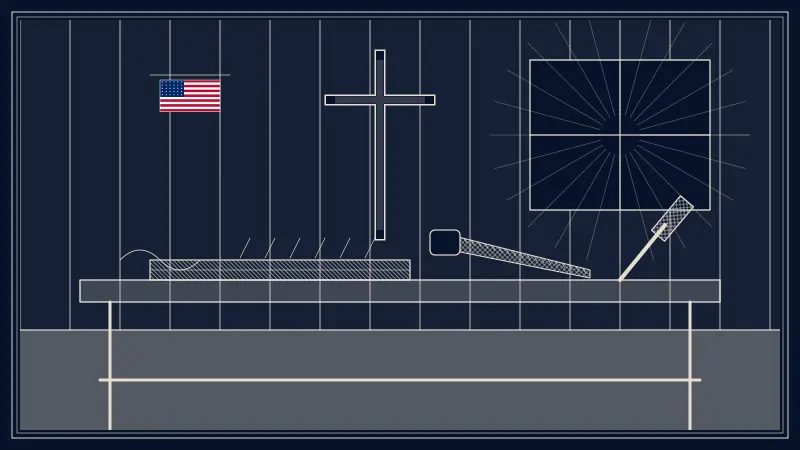
Here’s a fun fact that drives some people crazy: Jesus had a trade. Before He ever preached a sermon, He worked with His hands. In the Gospel, the people in His hometown literally ask, “Is not this the carpenter, the son of Mary?”
I think about that a lot. God could have shown up as anything. He chose to show up as a working man. That tells you something about how He sees work.
The pope who wrote about the industrial age
In 1891, right in the middle of the first great industrial revolution, Pope Leo XIII wrote a letter called Rerum Novarum (opens in a new tab). It’s about capital and labor, and honestly, it reads like it was written for today.
When our current pope, Leo XIV, explained why he picked his name, he pointed straight at it. As Ars Technica (opens in a new tab) reported, he said Leo XIII “in his historic Encyclical Rerum Novarum addressed the social question in the context of the first great industrial revolution.” And he said the Church offers its social teaching today “in response to another industrial revolution and to developments in the field of artificial intelligence.”
So if you care about AI, automation, manufacturing and jobs, this old letter is required reading.
What Leo XIII said about socialism
A lot of people assume the Church is anti-business. Read the actual text. Leo XIII is crystal clear: “the main tenet of socialism, community of goods, must be utterly rejected, since it only injures those whom it would seem meant to benefit.”
He goes further. He says that if the state takes everything over, “the sources of wealth themselves would run dry, for no one would have any interest in exerting his talents or his industry.” That’s the best one-line case against socialism I’ve ever read, and it came from a pope more than a century ago.
And then there’s my favorite line in the whole document: “The law, therefore, should favor ownership, and its policy should be to induce as many as possible of the people to become owners.”
That’s it. That’s my economic philosophy. Not a handful of giant owners and a nation of renters. As many owners as possible. Homeowners, shop owners, small manufacturers, families with a little piece of something that’s theirs.
But the worker is not a machine
Leo XIII doesn’t let the bosses off the hook either, and I don’t want to either. He writes that employers must “respect in every man his dignity as a person,” and that it is “shameful and inhuman” to “misuse men as though they were things in the pursuit of gain.” He says a worker needs rest, time for his family, time for God.
And he says something that should be stitched on every boardroom wall in America: “Each needs the other: capital cannot do without labor, nor labor without capital.”
That’s why I don’t see free markets and Christian faith as enemies. Markets are the best tool ever invented for creating wealth and lifting people out of poverty. Faith keeps us honest about what that wealth is for: families, communities, and the dignity of the guy on the line at 6 a.m.
Why this is an America First thing
For decades, a lot of our leaders treated American workers like a cost to be cut. Ship the job overseas, save a few bucks, call it efficiency. President Trump broke with that. Bringing work home, making it easier to build plants here, and putting American workers first is, in my view, exactly the kind of “favor ownership” policy Leo XIII was talking about.
Work is holy. Ownership is good. Socialism fails the very people it promises to help. A pope said it in 1891, and it’s still true. Let’s go build something.
Sources
Keep Reading
All stories Order
Order
They Said Church Was Dying. Young Americans Didn’t Get the Memo.
For basically my whole adult life, I’ve been told the same story. Church is dying. Young people are leaving and never coming back. Give it a generation and Christianity in America will be a… Order
Order
Pro-Life Isn’t One Issue. It’s Every Person, at Every Stage.
I get asked a lot why I talk about life so much on a blog that also talks about manufacturing and reactors. Fair question. My answer is simple: none of the rest of it matters if we don’t… First
First